Flame Embroidery Design Review for Small Business Merch
As an embroidery designer who has spent years digitizing and testing files for commercial use, I approach every new machine embroidery design with a critical eye. It is not just about whether the art looks good on a screen; it is about how it performs on fabric, how it holds up in the wash, and how it elevates a brand. Recently, I reviewed Flame, a digital embroidery file categorized under House and Embroidery, to determine its viability for small business merchandise and branded patch applications. This review is tailored for apparel decorators, Etsy sellers, boutique owners, and crafters looking to add high-value assets to their product lines.
First Impressions: Visual Personality and Brand Fit
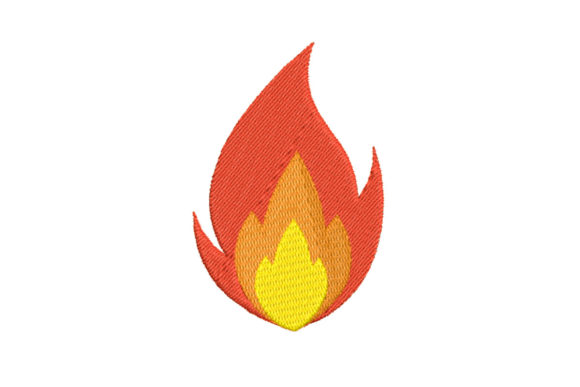
The first thing that strikes me about Flame is its versatility. The description notes that this design is suitable for projects related to kitchens, hot food, and fire safety campaigns. Visually, a flame motif can lean in several directions: it can be aggressive and bold, or warm and inviting. For a small business, the interpretation depends heavily on execution. In my assessment, Flame feels professional yet approachable. It does not scream "danger" unless paired with specific warning colors; instead, it suggests warmth, energy, and passion.
This visual personality makes it an excellent candidate for brands that want to convey heat or speed without losing a friendly tone. Think of a local bakery specializing in wood-fired breads, a spicy sauce brand, or a cozy café. The design feels handmade and premium, which is crucial for businesses competing in the handmade product market. It avoids the sterile look of generic clipart, offering a texture that translates well into thread.
Real-World Applications for Small Business Merch
When evaluating a digital embroidery file for commercial use, I always map out where it will live on a physical product. Flame shines in several key areas of small business merch.
- Embroidered Patches: This is perhaps the strongest use case. A flame design works beautifully as a standalone patch. You can sew these onto denim jackets, canvas bags, or hats. Patches allow customers to customize their own gear, increasing engagement with your brand.
- Apron Embroidery: For culinary businesses, Flame is a natural fit. Stitching this onto chef aprons or barista uniforms adds a layer of professionalism. It serves as a subtle badge of expertise, suggesting that the staff handles heat with skill.
- Cap Embroidery: Placing a simplified version of Flame on the front of a dad hat or trucker cap creates a trendy, streetwear-inspired look. Caps are high-margin items for boutiques, and a well-digitized flame logo can become a signature item.
- Tote Bag Design: Canvas totes are staples for eco-friendly brands. A flame stitched in contrasting thread colors on a natural cotton tote creates a striking visual that stands out in retail environments.
- Custom Apparel: Beyond uniforms, consider limited-edition t-shirts or hoodies. Using Flame as a chest logo accent or a sleeve detail adds perceived value to the garment, allowing you to charge a premium over plain blanks.
Technical Considerations and Production Challenges
While the aesthetic appeal of Flame is strong, technical execution is where many designers stumble. Because flames involve curves and potential gradients, stitch management is critical. Here are the practical notes I recommend considering before running a production batch.
Stitch Density and Fabric Texture
Fire motifs often require careful handling of stitch density. If the density is too high, the fabric may pucker, especially on lighter materials like cotton tees or linen aprons. Conversely, if the density is too low, the backing fabric might show through, ruining the clean look of the finished product. I advise testing the design on the exact fabric texture you plan to use. Heavy denim can handle denser stitching, while lightweight polos require a more open fill.
Size Constraints and Detail Loss
One common mistake is scaling a design down too far. If you intend to use Flame on a small patch or a curved cap front, ensure the details do not merge. Tiny outlines can break or become indistinguishable when stitched at less than two inches wide. Always check if the design works at small patch size before committing to a large run. If the original file includes fine details, you may need to simplify the vector path or adjust the digitizing for smaller applications.
Thread Colors and Contrast
The impact of Flame relies heavily on thread colors. Traditional reds, oranges, and yellows create a classic look, but do not be afraid to experiment. For a modern, subdued brand identity, consider monochromatic schemes using shades of grey or navy. However, always test contrast against your base fabric. A dark uniform requires bright threads for visibility, while a light tote bag might benefit from deeper, richer tones to prevent the design from looking washed out.
Stabilizer and Hoop Size
Proper stabilization is non-negotiable for professional results. Use a cut-away stabilizer for garments that will undergo frequent washing, such as staff uniforms. For woven items like caps or patches, a stiff backer is essential to maintain shape. Confirm the required hoop size before purchasing. While the description does not specify exact dimensions, ensuring your machine can accommodate the design’s footprint is a basic step in avoiding production delays.
Enhancing Brand Identity and Customer Trust
Why does a specific design matter for brand identity? Consistency builds trust. When a customer sees the same high-quality Flame emblem on your packaging, your website, and your physical merchandise, it reinforces recognition. A poorly stitched logo can detract from perceived quality, making a brand look amateurish. In contrast, a crisp, well-executed embroidery signals attention to detail.
For Etsy sellers and creative studios, using unique design assets like Flame helps differentiate your offerings from mass-produced competitors. It adds a tactile element that digital prints cannot replicate. This tactile quality increases buyer engagement; customers are more likely to touch, feel, and ultimately purchase an item that features textured embroidery.
Pre-Production Checklist for Designers
Before you launch Flame into your commercial embroidery workflow, follow this checklist to ensure success:
- Test in Black and White: Convert the design to grayscale in your software to check for contrast issues. If it looks muddy in black and white, it will lack definition in color.
- Create a Printable Mockup: Use a printable mockup to visualize how the design sits on different products. This helps in marketing materials before you have physical samples.
- Verify Licensing: Confirm commercial licensing terms. The description implies broad usability, but always read the specific license agreement included with the embroidery file to ensure you are covered for resale.
- Check File Formats: Ensure the file format is compatible with your embroidery machine. Common formats include PES, DST, and EXP. If the format is not listed, contact the seller or check the download package.
- Run a Sample Stitch-Out: Never skip this step. Stitch the design on a scrap piece of your actual production fabric. Inspect for thread breaks, tension issues, and registration accuracy.
In conclusion, Flame is a versatile and potent asset for small business owners in the House and Embroidery sectors. Whether used for fire safety campaigns, kitchen branding, or trendy streetwear, it offers a blend of professionalism and creative flair. By paying attention to technical details like stabilizer choice, stitch density, and scale, you can transform this digital file into a high-value physical product that strengthens your brand and delights your customers.