Merry Christmas Truck: A Designer’s Review for Business Merch
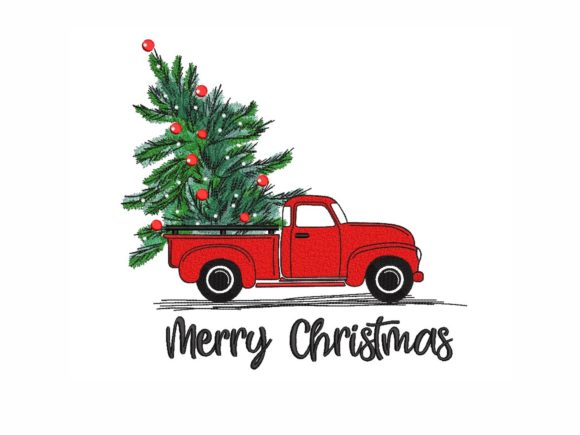
As an embroidery designer who has spent years digitizing and reviewing patterns for commercial use, I approach every new machine embroidery design with a critical eye. It is not just about whether the image looks cute on a screen; it is about how it translates to fabric, how it holds up in the wash, and most importantly, how it serves the brand identity of the small business owner purchasing it. Today, I am reviewing the Merry Christmas Truck design. This piece features a classic holiday vehicle carrying a Christmas tree, a motif that has become synonymous with cozy, rustic, and nostalgic seasonal marketing.
The product description states: "The Christmas tree is here Stitch this lovely Christmas embroidery design on any fabric that needs a touch of the holiday spirit. This machine embroidery design comes with multiple embroidery file for." While the description is brief, the visual potential of this design is significant for anyone in the custom apparel or handmade goods sector. Let us break down how this design performs in real-world business applications.
First Impressions: Visual Personality and Brand Fit
The immediate impression of the Merry Christmas Truck is one of warmth and tradition. It feels friendly, rustic, and distinctly handmade. For small business owners, this aesthetic is powerful. It does not scream corporate coldness; instead, it invites connection. This design works exceptionally well for brands that want to project values of community, heritage, and comfort. Think of local bakeries, florists, boutique coffee shops, or family-owned retail stores. The imagery of a truck hauling a tree is universally recognized and evokes positive emotional responses, which is the primary goal of effective holiday merchandising.
However, from a technical standpoint, we must look beyond the sentiment. Is the design balanced? Does it have clear lines? In my experience, truck designs often rely on geometric shapes for the vehicle and organic, irregular lines for the tree. This contrast can be challenging for digitizers. A well-digitized version will ensure the tree does not become a blob of green thread and the truck retains its structural integrity. When evaluating this digital embroidery file, I look for clean satin stitches on the truck body and careful fill stitches for the tree foliage to maintain texture without excessive bulk.
Real-World Applications for Small Business Merch
Where does this design actually shine in a commercial setting? The versatility of the Merry Christmas Truck makes it a strong candidate for various small business merch items. Here is how I recommend deploying it:
- Embroidered Patches: This is perhaps the strongest use case. A patch allows for controlled stitch density and can be applied to multiple products. You can create a limited-edition holiday patch for customers who spend over a certain amount, turning a transaction into a collectible moment.
- Apron Embroidery: For cafes and bakeries, staff uniforms are walking billboards. Placing this design on the chest pocket or lower corner of a canvas apron adds a festive touch without overwhelming the professional look of the uniform.
- Tote Bag Design: Canvas tote bags are staples for boutiques. The flat surface of a tote bag is ideal for medium-sized embroidery designs. The Merry Christmas Truck can serve as a central graphic, appealing to shoppers looking for reusable, festive gift bags.
- Cap Embroidery: A simplified version of this design, or a smaller scale placement, works well on dad hats or beanies. However, caution is needed regarding the curvature of the cap front.
- Customer Gifts: Small embroidered ornaments or keychains featuring this truck can serve as high-perceived-value gifts for loyal clients during the holiday season.
Technical Considerations and Production Risks
While the aesthetic is appealing, production realities must be addressed. As a designer, I advise checking several technical factors before running a large batch of commercial embroidery.
First, consider stitch density. Holiday designs often feature dense fills for trees and snow. If the density is too high, the fabric may pucker, especially on lighter materials like cotton tees or linen tote bags. Always test the design on the actual fabric you intend to use. If you are working with textured fabric, such as terry cloth towels or heavy denim, the design needs to be adjusted to ensure the details do not get lost in the weave.
Second, pay attention to thread colors. The contrast between the truck (often red or vintage blue) and the tree (green) must be sharp. If you are embroidering on dark uniforms, you may need to add an underlay or choose brighter thread shades to ensure visibility. Poor color contrast can make the design look muddy from a distance, reducing its impact as a branding tool.
Third, evaluate the hoop size requirements. The description mentions multiple files, which is standard for accommodating different hoops. Ensure you select the file that matches your machine’s capability and the desired finished size. Do not stretch a small file to fit a large hoop, as this will result in pixelated, jagged stitches. Conversely, shrinking a large design too much can cause thread breaks and loss of detail, particularly in the small elements of the truck’s cabin or the tree’s branches.
Enhancing Brand Identity and Customer Trust
Using a cohesive design like the Merry Christmas Truck contributes significantly to brand identity. Consistency in visual assets builds trust. When a customer sees the same high-quality embroidery on your apron, your packaging, and your social media printable mockup, it reinforces professionalism. It signals that you care about the details.
For Etsy sellers and crafters, this design can differentiate your handmade product from mass-produced imports. Embroidery has a tactile quality that printing cannot replicate. By offering items with this specific design, you are selling an experience of craftsmanship. This perceived value allows for higher price points and deeper customer engagement. Buyers are not just buying a hat; they are buying a piece of artisanal holiday cheer.
Practical Designer Notes for Implementation
Before you launch your holiday collection featuring this design, follow these practical steps to ensure success:
- Test in Black and White First: Convert your digital preview to grayscale. If the design loses its definition without color, the digitizing may rely too heavily on color changes rather than stitch structure. Good embroidery should hold its shape regardless of thread choice.
- Check Small Patch Sizes: If you plan to make small patches, verify that the text (if any) or fine details remain legible. Tiny lettering often merges together when stitched at small scales.
- Use Proper Stabilizer: The right stabilizer is crucial. For stretchy fabrics like knit caps, use a cut-away stabilizer. For woven tote bags, a tear-away may suffice, but hooping technique is key to preventing distortion.
- Create a Mockup for Client Approval: If you are doing custom work for other businesses, always provide a realistic printable mockup or a physical sample. Screens can be misleading regarding texture and sheen.
- Confirm Commercial Licensing: The product description does not explicitly state license terms. Before using this embroidery file for any custom apparel or goods you intend to sell, you must confirm the licensing agreement with the creator. Never assume a purchased file includes commercial rights.
- Review Fabric Texture: Test on the exact material. A design that looks crisp on twill might look uneven on corduroy. Adjust your tension and stabilizer accordingly.
In conclusion, the Merry Christmas Truck is a potent asset for small business owners looking to capitalize on the holiday season. It offers a blend of nostalgia and professionalism that, when executed with technical precision, can elevate your design assets and strengthen your market presence. By paying attention to stitch density, fabric compatibility, and strategic placement, you can transform this simple image into a powerful tool for brand recognition and sales growth. Always prioritize quality control and licensing compliance to protect your business and deliver a superior finished product to your customers.