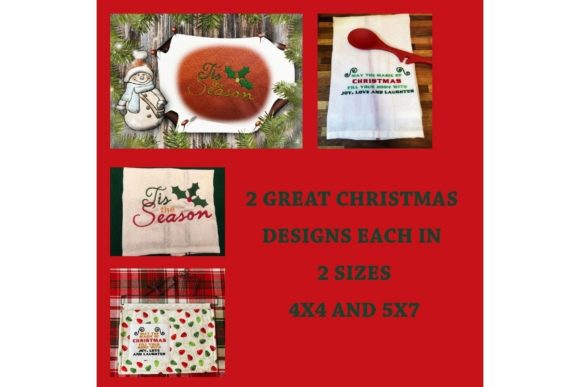
Reviewing Christmas Saying for Real Holiday Embroidery Projects
As a designer who spends more time staring at stitch simulations than I care to admit, I have learned that not every festive graphic translates well to thread. Some designs look fantastic on a screen but turn into a tangled mess of puckered fabric once the needle hits the hoop. That is why I approach every new machine embroidery design with a mix of excitement and healthy skepticism. Recently, I took a close look at Christmas Saying, a digital asset promising two versatile holiday phrases for various home and apparel applications. Here is my practical assessment of how this design holds up in real-world production.
First Impressions: Mood and Visual Personality
The immediate appeal of Christmas Saying lies in its simplicity. In an era where over-digitized, overly complex graphics often dominate the market, these two sayings offer a breath of fresh air. The layout feels balanced, avoiding the clutter that can plague seasonal designs. When I loaded the digital embroidery file into my software, the clean lines suggested a modern yet cozy aesthetic. It does not scream for attention; instead, it invites it. This subtlety is crucial for high-end handmade products where the quality of the stitch work should shine as much as the message itself.
The visual personality here is adaptable. It feels equally at home on a rustic kitchen towel as it does on a sleek, modern tote bag. For an Etsy seller or small shop owner, this versatility is a significant advantage. You are not locked into a single niche. The design creates a mood of warm, traditional hospitality without feeling dated or kitschy. It is the kind of imagery that customers associate with thoughtful, personalized gifts rather than mass-produced decor.
Real-World Application: From Aprons to Sweatshirts
To truly test the viability of any embroidery project, you have to imagine it on actual goods. I visualized Christmas Saying on a few key items to gauge its potential. First, consider a linen apron. The text-based nature of the design allows it to sit comfortably across the bib or the waistband without overwhelming the fabric. The open spacing in the lettering would likely render well, ensuring that the texture of the linen remains visible through the stitches.
Next, I pictured it on a heavyweight cotton sweatshirt. This is a popular item for custom apparel during the holiday season. The design’s structure seems robust enough to handle the slight stretch of fleece or French terry, provided the right stabilizer is used. It would also work beautifully as a sweatshirt embroidery accent on the sleeve or upper chest, offering a understated holiday nod that adults might prefer over loud, all-over prints.
For those running a craft business, think about tea towels and pillow covers. These are high-volume sellers during Q4. The two different sayings included in the pack allow for product variation. You could offer a set of two towels with complementary phrases, increasing the perceived value for the buyer. The design scales well for these smaller home goods, maintaining legibility even when reduced slightly for a corner placement on a napkin or hand towel.
Technical Considerations and Stitch Performance
While the aesthetic is strong, the technical execution is where many designs fail. Since Christmas Saying comes with multiple embroidery file formats, it is compatible with various machines, but you must still do your due diligence. Text-based designs rely heavily on clear satin stitch borders or precise running stitch details to define the letters. If the digitizing is poor, small serifs or tight curves can become bulky.
I recommend checking the stitch density before hitting "start." If the design uses heavy fill stitch areas within the letters, it may cause puckering on thinner fabrics like cotton voile or lightweight polyester. For best results on such materials, use a cut-away stabilizer to support the stitches long-term. On thicker fabrics like denim or canvas tote bags, a tear-away stabilizer might suffice, but always test first.
One critical area to inspect is the connection points between letters. In machine embroidery, jumps and trims need to be minimized for efficiency and cleanliness. A well-digitized applique design or standard text design will have logical stitch paths that reduce thread waste and backside bulk. Since I cannot see the exact stitch count or pathing without loading the specific file, I advise downloading a trial version or viewing the simulation carefully to ensure there are no excessive jumps that could snag on loose-weave fabrics.
Navigating Fabric and Hoop Constraints
Not every surface is friendly to text embroidery. When using Christmas Saying on curved surfaces like caps or hats, extra caution is needed. The curvature can distort straight lines, making text appear wavy. If you plan to use this for embroidered patch creation or direct-to-garment cap embroidery, ensure your hooping technique is flawless. Using a strong backing and possibly a topping film can help keep the stitches sitting on top of textured fabrics like corduroy or terry cloth.
Dark fabrics present another challenge. If you are stitching light-colored thread on a black hoodie, the density of the design becomes even more important. Gaps in the stitching will show the dark fabric underneath, which can look messy if not intentional. Test your thread colors against your fabric choices. High-contrast combinations look crisp, but low-contrast tonal looks require perfect stitch coverage to look professional.
Also, consider the hoop size. While the description mentions compatibility with multiple machines, you need to confirm that the largest version of the saying fits within your standard hoops (such as 5x7 or 6x10). If you are working with a smaller 4x4 hoop, check if the design can be split or if a smaller version is included that retains legibility. Tiny lettering can easily become illegible if scaled down too far, turning beautiful typography into unreadable blobs.
Commercial Value and Brand Consistency
For commercial embroidery professionals and small shop product creators, consistency is key. Christmas Saying offers a reliable asset that can help build a cohesive holiday collection. When customers see a consistent style across your handmade product line, it builds trust. They know what to expect in terms of quality and aesthetic.
Using this design in your printable mockup previews can also boost engagement. Because the design is clean, it photographs well. Clear, sharp images of embroidered text perform better on social media and online marketplaces than busy, chaotic designs. It allows the viewer to focus on the craftsmanship and the sentiment of the message.
However, always verify the licensing terms. Just because a file is usable on multiple machines does not automatically grant unlimited commercial rights. Ensure you understand whether you can sell the finished product or if there are restrictions on volume. Protecting your design assets and respecting intellectual property is part of running a sustainable creative business.
Final Verdict for Designers and Makers
Christmas Saying is a solid addition to your holiday library. It avoids the pitfalls of over-complication and offers genuine versatility for aprons, towels, and apparel. Its strength lies in its adaptability and clean presentation. However, success depends on your technical setup. Always stitch out a test sample on scrap fabric similar to your final product. Check your tension, adjust your stabilizer, and ensure your thread quality is high.
If you are looking for a reliable, professional-looking text design that respects the medium of embroidery, this is a worthy candidate. It supports the creation of meaningful personalized gifts and profitable holiday embroidery items. Just remember: the design provides the blueprint, but your skill and attention to detail bring it to life.