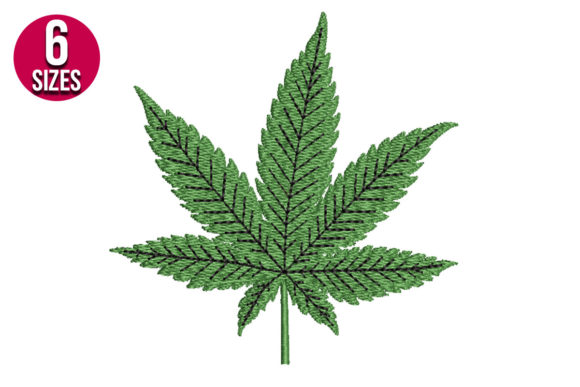
Marijuana Leaf Embroidery: A Designer’s Practical Review
As a designer who spends more time staring at stitch simulations than I do sleeping, I have learned that not every machine embroidery design translates well from screen to fabric. Some look intricate on a monitor but turn into a tangled mess of thread breaks and puckering on the hoop. When I first pulled up the Marijuana Leaf file, my initial reaction was one of cautious optimism. It sits comfortably within the Single Flowers category, yet it carries a bold, graphic weight that demands attention. This is not a delicate, whisper-quiet floral; it is a statement piece. For those of us running a craft business or selling on Etsy, understanding how this specific embroidery file behaves in the real world is crucial before we commit to production.
First Impressions: Shape, Mood, and Visual Personality
The immediate appeal of the Marijuana Leaf design lies in its recognizable silhouette. In the world of Embroidery, recognition is half the battle. You want a design that reads clearly from three feet away. The jagged edges and iconic seven-point structure are rendered with a balance of simplicity and detail. It feels modern, slightly rebellious, and undeniably fun. This mood makes it a versatile asset for a wide range of projects, from casual streetwear to quirky home decor.
What stands out to me as a reviewer is the potential for texture. Depending on how the digitizer has handled the interior, this design likely relies on a combination of fill stitch work for the body of the leaf and potentially satin stitch borders to define those sharp tips. If the density is managed correctly, the leaf should have a lush, raised appearance that invites touch. However, if the stitch density is too high, you risk creating a stiff, cardboard-like patch on your fabric. My advice? Always check the stitch count and density map if your software allows it, before hitting "start."
Real-World Application: From Hoodies to Tote Bags
Let’s talk about where this design actually shines. I recently worked on a custom order for a client wanting a line of sustainable canvas goods. The Marijuana Leaf was the perfect candidate for a tote bag design. Canvas is a sturdy, woven fabric that handles higher stitch counts well, allowing the green threads to pop against the natural beige background. The result was a crisp, professional-looking handmade product that felt substantial and high-quality.
Beyond bags, this design is a strong contender for sweatshirt embroidery. Imagine a oversized, neutral-toned hoodie with this leaf stitched prominently on the back or subtly on the chest. The softness of fleece contrasts beautifully with the structured nature of the embroidery. It also works surprisingly well for custom apparel like t-shirts, provided you use the right stabilizer. For a more niche market, consider using it as an embroidered patch. Patches allow you to stitch the design on a stable twill base, trim it close, and then apply it to jackets, caps, or backpacks. This method bypasses many of the challenges associated with stitching directly onto difficult fabrics.
For Etsy sellers and small shop owners, this design offers great versatility. It fits naturally into categories like holiday embroidery for 4/20-themed gifts, or as part of a broader botanical collection. It can be scaled down for baby embroidery on onesies—though I would advise softening the color palette to pastels if targeting that demographic—or scaled up for bold pillow covers. The key is matching the scale of the design to the scale of the item.
Navigating Challenges: Fabric, Hoops, and Stability
While the Marijuana Leaf is described as "fun and easy to stitch," experienced designers know that "easy" is relative. There are specific scenarios where you need to proceed with caution. First, consider the hoop size. Ensure your machine’s hoop can accommodate the design dimensions without needing to re-hoop, which can lead to alignment issues. If the design is large, a 5x7 or larger hoop is ideal.
Fabric choice is critical. On thin or stretchy fabrics, such as lightweight jersey or rayon, this design could cause significant puckering if not stabilized properly. I always recommend using a cut-away stabilizer for garments that will be washed frequently, as it provides long-term support. For textured fabrics like terry cloth or heavy denim, you might need a topping to prevent the stitches from sinking into the pile. Without it, the fine details of the leaf’s serrated edges could get lost.
Dark fabrics present another challenge. If you are stitching a bright green leaf on a black hoodie, you must ensure there are no gaps in the fill. Any underlying fabric showing through will break the visual continuity. Running a test stitch-out on scrap fabric of the same type and color is non-negotiable. It saves you from ruining expensive final products. Also, be mindful of curved surfaces like caps. Stitching a flat, wide design on a curved cap brim requires careful hooping and possibly resizing the design to prevent distortion.
Enhancing Product Value and Brand Consistency
From a business perspective, the Marijuana Leaf design can significantly boost customer engagement if used strategically. It appeals to a specific demographic that values authenticity and counter-culture aesthetics. When presented well, it elevates a basic garment into a personalized gift or a boutique item. The clarity of the stitching reflects directly on your brand’s professionalism. Sloppy tension or loose threads will undermine the cool factor of the design, so meticulous finishing is essential.
To maximize visual appeal, experiment with thread colors. While traditional green is obvious, consider metallic gold for a luxe feel, or earthy tones like olive and mustard for a vintage vibe. Testing your design in black and white mockups can also help you understand the contrast and shape definition before you commit to thread. This step is vital for creating effective printable mockup images for your online store. High-quality previews drive sales, and showing the design on various design assets helps customers visualize the finished product.
Practical Notes for the Serious Maker
Before you integrate this digital embroidery file into your commercial workflow, take a moment to review the technical specifics. Since the product description does not list exact stitch counts, file formats, or license terms, you must verify these details with the provider. Confirm that the file format is compatible with your machine (PES, DST, JEF, etc.). Check the licensing agreement to ensure you are cleared for commercial embroidery use. Some designers allow personal use only, while others permit unlimited physical sales but restrict digital redistribution.
Finally, remember that context is everything. This design is a tool in your kit. Use it to add personality to a plain apron, to create a standout small shop product, or to offer a unique twist on standard floral motifs. By respecting the technical requirements of the fabric and the machine, you can ensure that every embroidery project featuring the Marijuana Leaf meets the high standards your customers expect. Happy stitching.